Many Hair Loss Shampoos May Be Making Thinning Hair Look Worse
According to our trichologist, much of what patients describe as shedding is hair breaking, a problem she says the brands selling to them rarely mention.

Hair & Scalp Health · Recently · 9 min read
I'm Eliza Mel, a trichologist. I've spent the last 13 years working with people whose hair is thinning.
Most weeks, I see at least one patient who arrives with thinning hair and a bag of products. They have usually followed the standard advice. They bought a shampoo marketed for hair growth, added a conditioner, and when that didn't help, switched to something labeled clean or sulfate-free.
In many of these cases, their hair looks worse than it did before they started.
What stands out to me is how many of these patients are no longer mainly worried about the thinning itself. Many have accepted it to some degree. What worries them is the next product. After a few bad experiences, trying something new starts to feel like a risk to hair they can't get back.
This article explains what I think is happening in a lot of those cases, and what I now suggest to patients.
READ IF Your Wet Hair Squeaks When You Pinch And Twist It
There's a simple way to notice the problem I'm describing. After rinsing out your shampoo, pinch a strand of wet hair and twist it between your fingers. If it drags and squeaks rather than sliding smoothly, that's worth paying attention to.
Other signs I hear about regularly include:
- 💧Hair that squeaks under the fingers after washing
- 🌾Hair that feels "like straw" by the afternoon
- ✂️More short hairs in the brush than a few months ago
- 📏A part that looks wider after adding more conditioner
- 🔴Itching that a brand described as "normal"
- 🧴A new product that seemed to make things worse
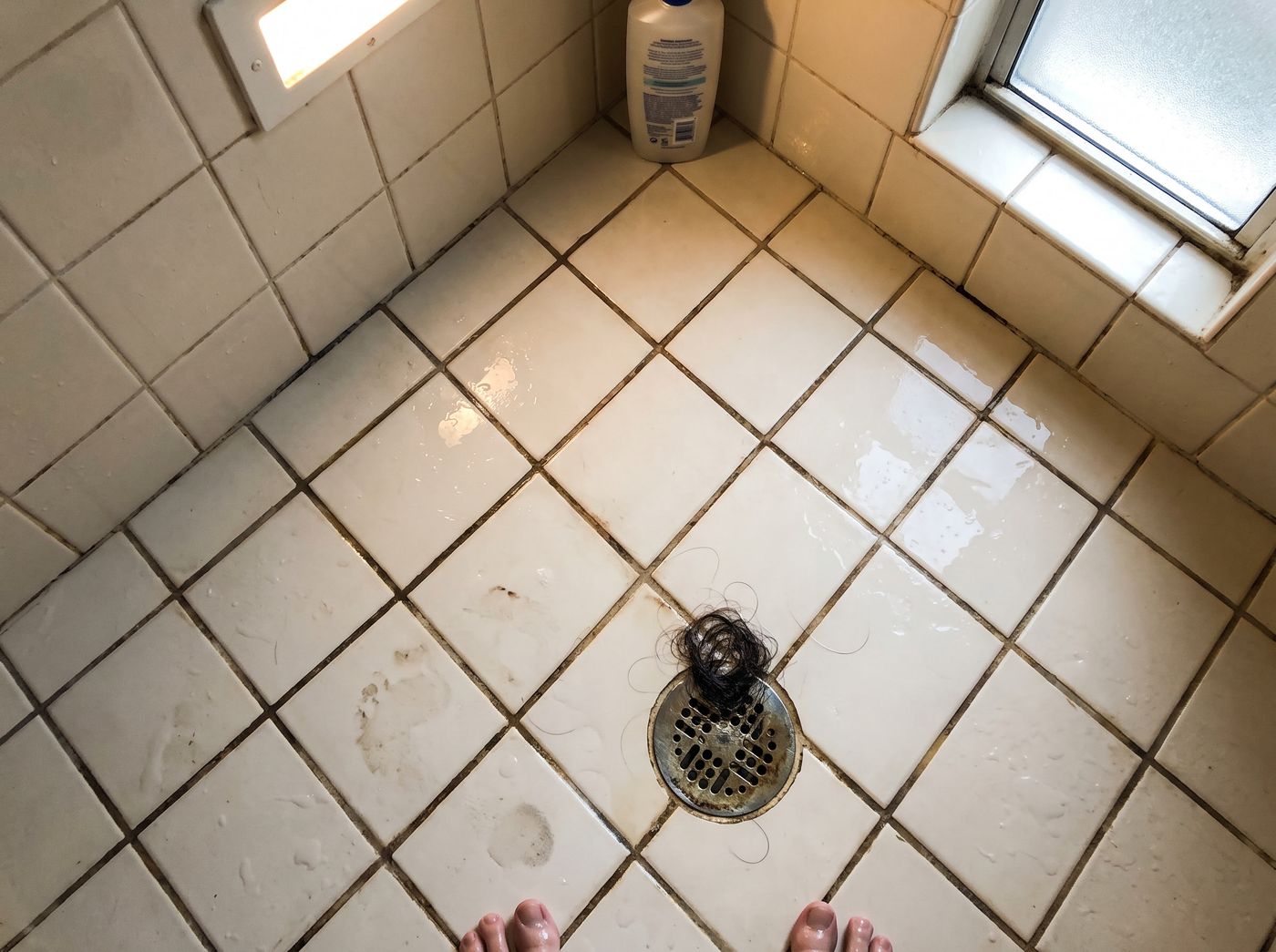
- 🚿Putting off washing because of how much hair comes out
💬 What people with thinning hair are saying online
"My hair is so fried and will be so frizzy/dry despite feeling clean and using conditioner."
"super dried out and stripped."
"No difference except my showers are annoyingly longer now… and it's making my hair look lifeless."
"I can't afford to lose more hair."
"after 4 uses, I'm afraid to keep using it."
"I was scared to wash my hair."
Quotes from public Reddit threads and retailer reviews of other hair products.
Different people. Different products. The same description.
These symptoms have different causes, but in my experience they very often trace back to the same place: the shower.
He Was Sure He Was Losing His Hair Faster.
One patient, whom I'll call Daniel, is a good example.
On the day he found me, he ran his hand through his hair before work and noticed more strands between his fingers than he had seen before.
He was 38 and had been thinning on top for about three years. His father had lost his hair the same way, so he had largely accepted it. What worried him was the idea that it was speeding up.
"I can't afford to lose more," he told me at his first appointment. "Every time I try something, I feel like I'm gambling with hair I can't get back."
Over the previous year, he had tried a number of products.
He started with a shampoo marketed for hair growth, at $34 a bottle, and used three bottles. It lathered heavily and left his hair squeaking under his fingers, which he assumed meant it was working. By midday, his hair felt dry and rough.
To fix that, he added a conditioner, at $18 a bottle, and went through four. His hair felt softer but also looked flatter, and he began to notice his part under the lights at work.
After reading that sulfates could be harsh, he switched to a sulfate-free shampoo at $29 and used two bottles. His hair still felt dry.
He then added a $42 hair mask, a $26 scalp oil and a $31 leave-in treatment.
In total, he had spent $331 on products meant to protect the hair he still had.
The cost wasn't what bothered him most. What bothered him was the sense that the products he'd chosen to protect his hair were making it look worse.
In March, after several weeks of an itchy scalp following his latest shampoo, he contacted the brand. The reply said the itching was normal, meant the product was working, and that he should keep using it.
He did. Two weeks later, he went four days without washing his hair because he didn't want to see how much came out.
That was when he made an appointment.
He told me he was losing his hair faster than ever. Rather than start with his history, I asked to see his hairbrush, pulled out a hair and looked at the end.
Hair Thinning Is Probably Genetic, But The Breaking Isn't.
Thinning hair is mostly genetic and hormonal. If it runs in your family, it is likely to affect you too. But not every hair in a brush is the result of thinning.
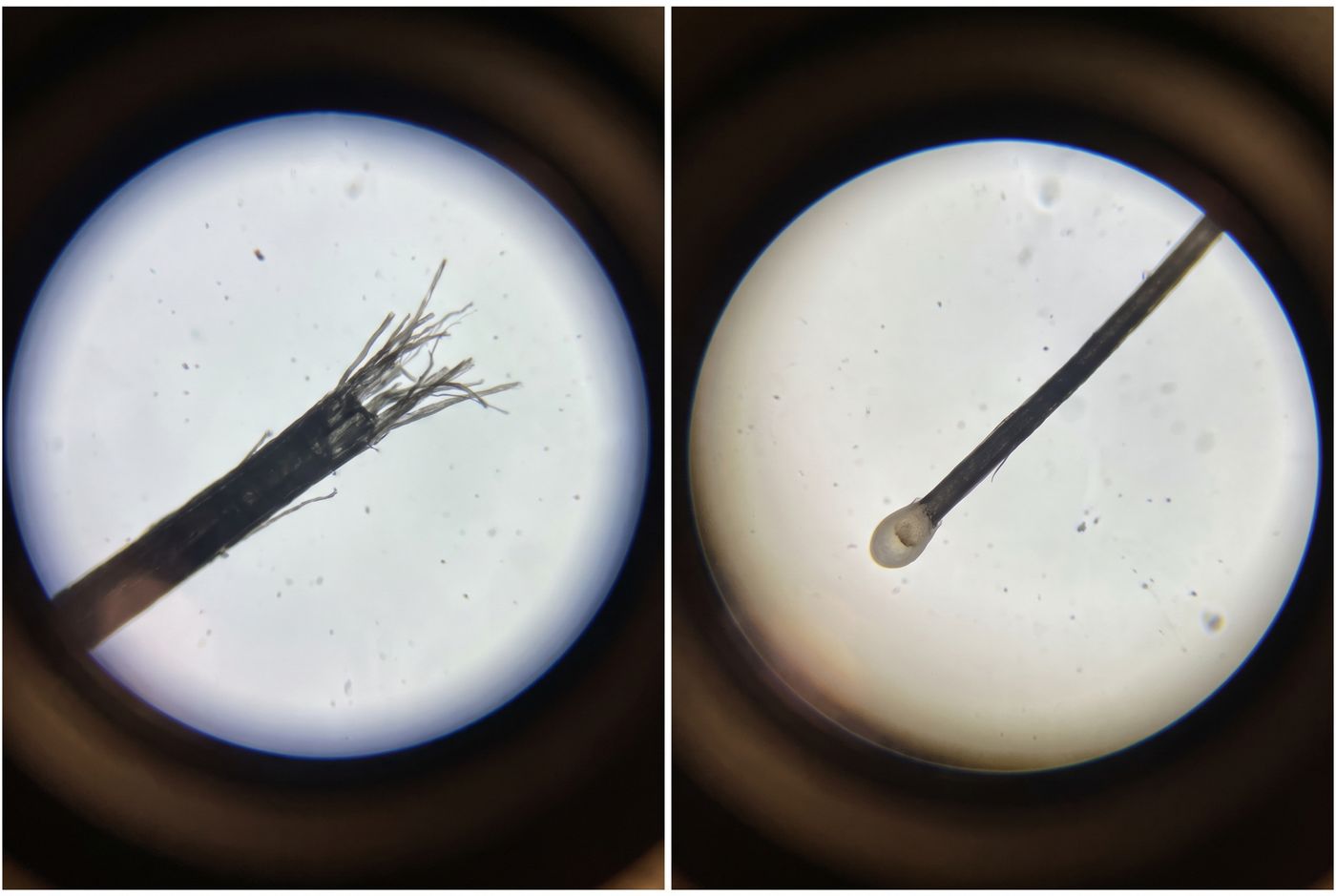
When a hair falls out naturally, it comes out from the root. At the end, there is usually a small white bulb, a little like the head of a matchstick.
When a hair breaks, there is no bulb. The end is blunt or frayed, because it has snapped somewhere along its length.
In a drain, on a pillow or in a brush, the two look very similar. As a result, many people count every hair they find as hair loss, when some of it is actually breakage.
In Daniel's case, most of the hairs in his brush had no bulb. He wasn't losing hair faster than before. Much of what he was seeing was breakage.
🔬 The 60-Second Test: Did Your Hair Fall Out, or Did It Snap Off?
- Take five hairs from your hairbrush.
- Hold each one under a white light and look closely at the end.
- A small white bulb means it shed from the root. No bulb means it broke.
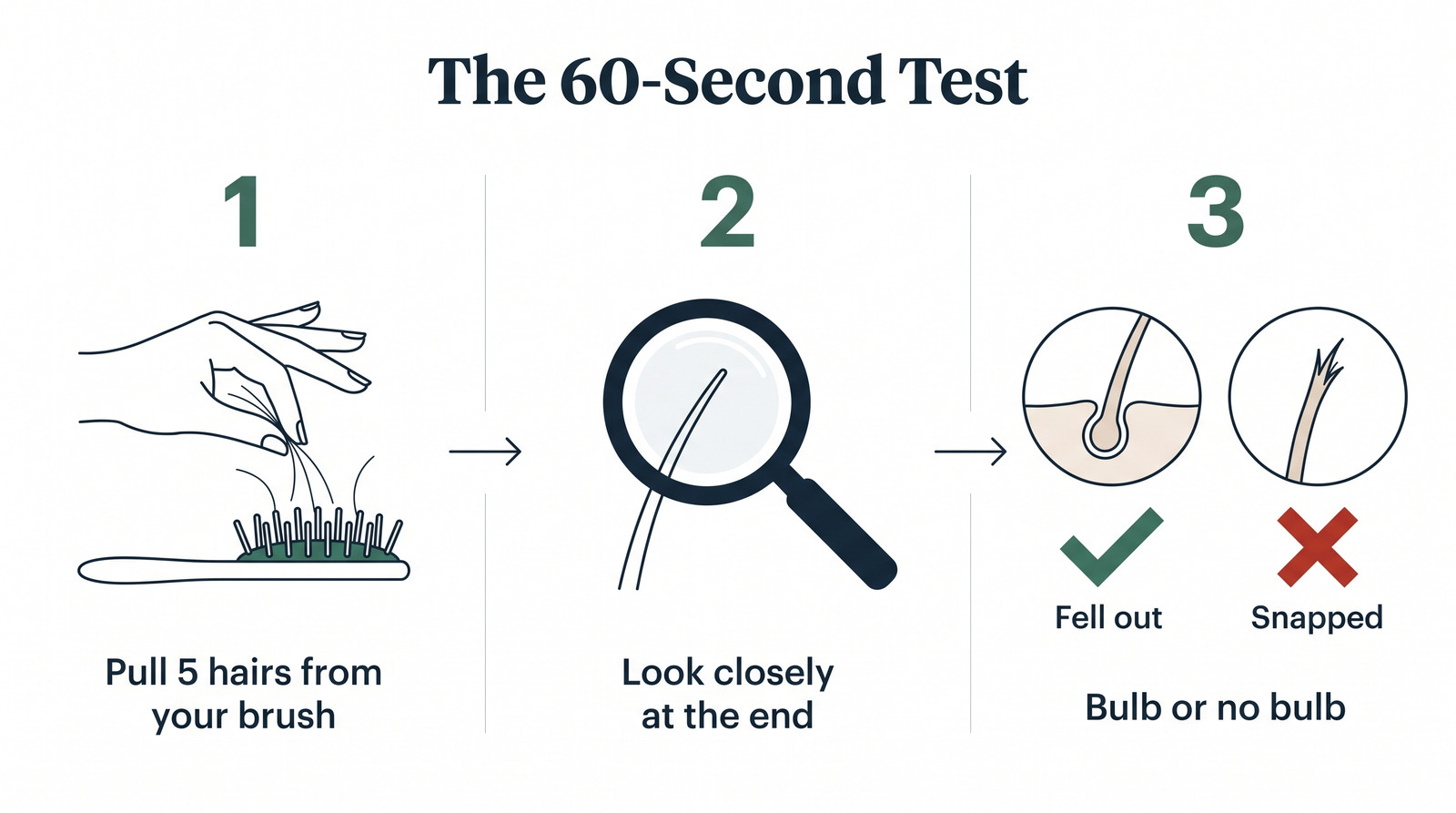
If most of your hairs have no bulb, breakage is likely part of what you're seeing, and breakage is often something you can reduce.
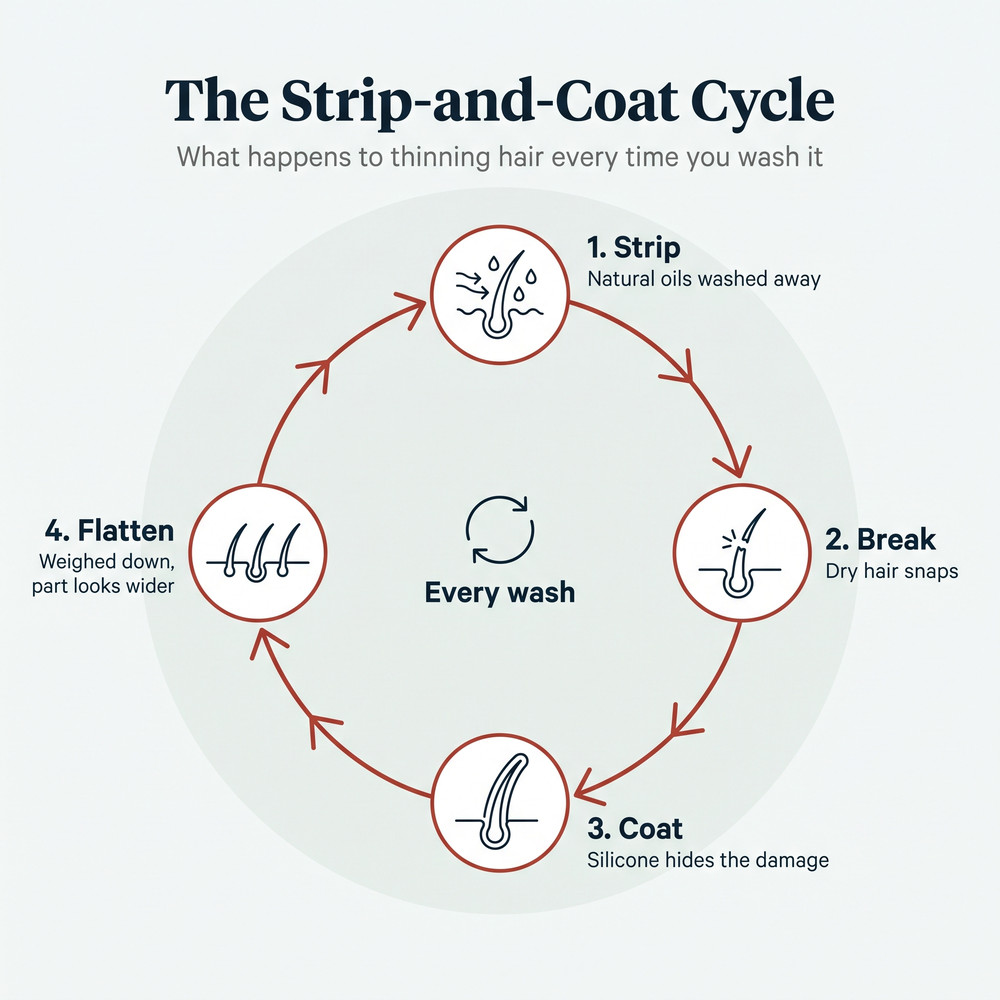
The Strip-and-Coat Cycle: What Every Wash Does to Thinning Hair
Here is how I explained it to Daniel.
🚿Step 1: Strip. Many shampoos remove buildup by stripping the scalp's natural oils at the same time. They don't distinguish between the buildup and the oils hair needs. Thicker hair can usually tolerate this. Thinner hair relies more on those oils for strength and body.
💔Step 2: Break. Without those oils, hair becomes dry and then brittle. Brittle hair breaks more easily when it's brushed, tied back or towel-dried. The broken pieces end up in the drain, where they look like shedding.
🧴Step 3: Coat. Dry hair feels rough, so many formulas include silicone, and many people add conditioner, to make it feel smooth again. This improves how hair feels, but it doesn't address the dryness underneath.
⬇️Step 4: Flatten. That coating adds weight at the root. Fine hair can't support it well, so it lies flatter against the head. The gaps between strands become more visible, and the part can look wider than it is.
🔁Step 5: Repeat. The next wash strips the hair again, and the process starts over. Over weeks and months, this can make the remaining hair look progressively thinner, even when someone is following their routine carefully.
🔬 Under the microscope: what every wash does to one strand
Seen this way, several common symptoms fit together:
- Hair that feels like straw is often stripped hair.
- Extra hair in the drain may include broken pieces.
- Flat hair and a wider part can come from coating.
- An itchy scalp may reflect irritation from a harsh cleanser.
And the shampoo and the conditioner meant to offset it are often made by the same company and sold as a set.
5 Things in Your Shower That Are Damaging the Hair You Have Left
These are the patterns I see most often, along with what product labels tend not to explain.
1.The "Deep Clean" That Leaves Thin Hair Like Straw
Many patients describe their hair as feeling "squeaky clean" after washing, and they usually mean it positively.
In my view, it's more of a warning sign. That squeak often means the hair has been stripped of the oils it needs. Some of the harshest formulas are those marketed for growth, thickening or treatment, which means they are often used on the most fragile hair.
A useful comparison is washing a wool sweater with dish soap. It gets clean, but it also becomes stiff and rough, and repeated washing wears it down.
In short, hair that feels very clean after washing may also be more prone to breaking.
2.The Conditioner Sold to Hide What Your Shampoo Just Did
This is the pattern I see most often.
A shampoo leaves hair dry, so conditioner is added. The conditioner coats the hair, and fine hair doesn't hold that weight well, so it lies flat and the part looks wider. People then tend to wash more often, which strips the hair again, and use more conditioner in response.
The result is hair that is dried out by one product and weighed down by another, and in both cases the thinning is more noticeable.
It's similar to painting over rust. The surface looks better for a while, but the underlying problem remains.
Many of my patients use far more conditioner than they did a year earlier and are surprised their hair looks thinner. This cycle often explains why.
3."Keep Going, It's Normal": The Advice That Keeps You Scratching
When a new product causes itching or seems to increase shedding, people are often told it's a "detox phase" and that they should push through it.
There isn't a scalp detox. Skin doesn't purge in the way this advice suggests.
Itching and flaking are signs of irritation. Irritation leads to scratching, and scratching can break hair near the surface. So some of what's described as "detox shedding" may actually be caused by continuing to use the product.
Some people respond by washing less often because they're worried about losing hair. That allows oil and buildup to sit on the scalp, which can make hair look flatter and increase itching.
If a product makes your scalp feel worse, that's generally a reason to stop using it rather than continue.
4.The "Clean" Bottle Can Still Be the One Doing the Damage
Many patients choose sulfate-free products specifically to avoid harsh ingredients, and often pay more for them.
Some still find their hair becomes dry.
"Sulfate-free" tells you that one type of ingredient isn't included. It doesn't tell you what is. A formula can avoid sulfates and still use other strong cleansers, along with fragrance that may irritate a sensitive scalp.
The front of a bottle is designed to market the product. The ingredient list on the back is more informative. When patients bring me a shampoo, I check two things: whether every ingredient is listed, and what is actually doing the cleaning.
A product that appears gentle on the front isn't necessarily gentle in practice.
5.Nobody Gets Paid to Protect the Hair You Have Left
Most hair loss products are marketed around one idea: growth.
Very few are marketed around protecting the hair people already have. As a result, stronger "treatment" formulas are often sold to people whose hair is most fragile.
This tends to lead to additional purchases: masks, oils and leave-in treatments to address the dryness, which then recurs with the next wash.
Formula changes add another complication. When a product someone relies on is reformulated, the results can change noticeably, and they may find themselves starting over.
There is little commercial incentive to tell people to stop damaging their hair. The incentive is to sell the next product.
Everything You Bought Either Stripped Your Hair or Coated It. Nothing Protected It.
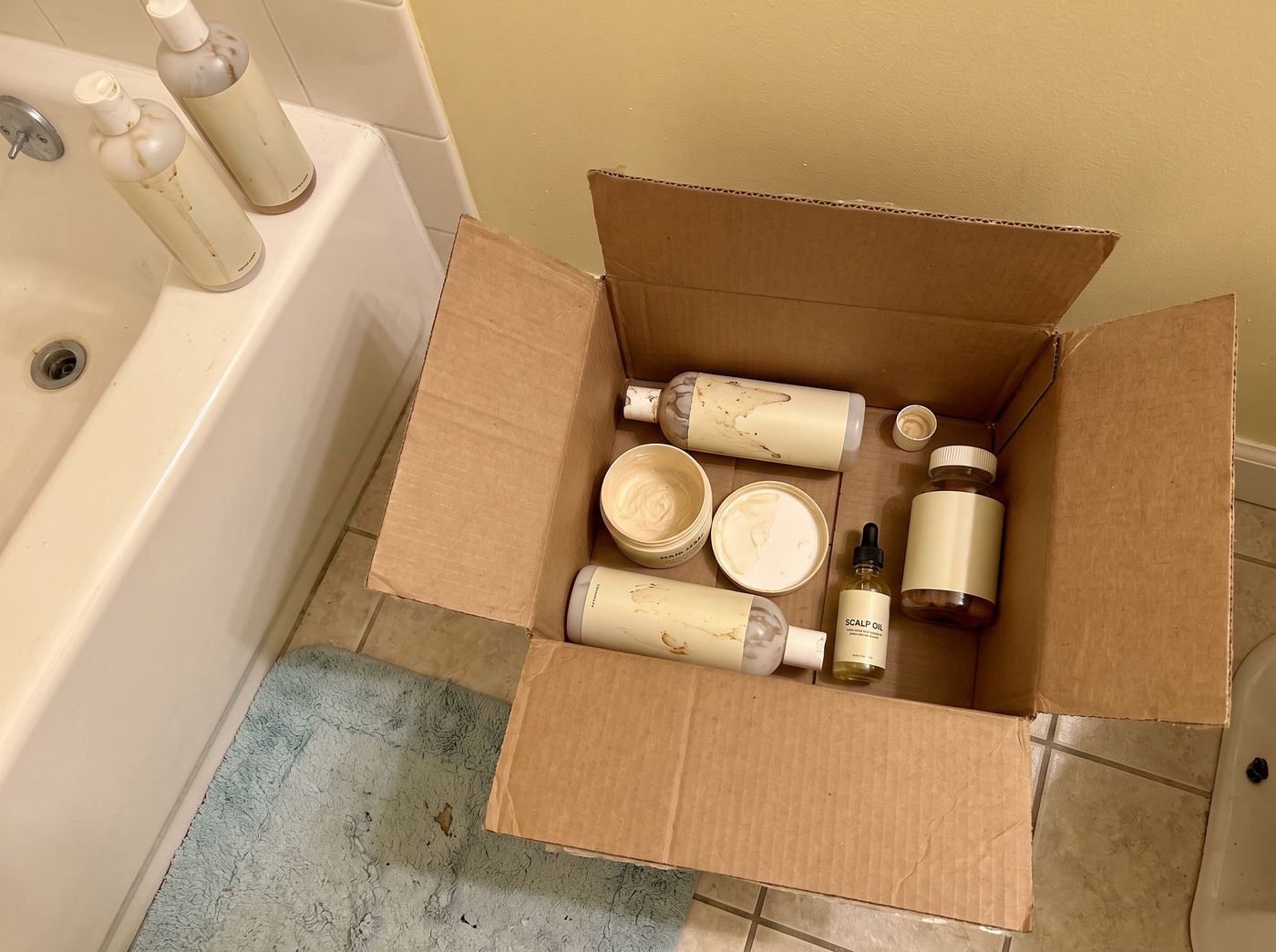
When patients show me what they've been using, the same pattern appears. Most products fall into one of two groups: those that strip the hair and those that coat it.
Growth-focused and "clean" shampoos often fall into the first group.
Conditioners, masks and oils fall into the second. They improve how hair feels for a short time, but they add weight at the root, which can make thinning more visible.
Products that initially worked sometimes stop working after a reformulation.
Supplements and serums, meanwhile, are aimed at what happens inside the body, while the damage I'm describing happens on the outside, during washing.
When I explained this to Daniel, his first response was, "So I did this to myself."
He didn't. He used widely available products in the way he was told to use them. What was missing was a product designed to clean without stripping or coating.
"Shampoo Only Touches Your Scalp for Two Minutes." That's Exactly When the Damage Happens.
A common objection is that shampoo can't make much difference because it's only on the scalp briefly before being rinsed off. It's a reasonable point, and I used to share that view.
But those two minutes are exactly when oils are stripped and coatings are applied, and it happens with every wash.
That means washing is also where the damage can be reduced.
To be clear, this isn't about a shampoo growing hair. No shampoo does that reliably, whatever the marketing suggests. It's about using a shampoo that doesn't take away more than it should.
The white-bulb test is a straightforward way to see whether this applies to you. Most people can see a difference in their own brush within a week or two.
The 6 Things I Check Before Any Patient Uses a Shampoo
I look for six things in a shampoo, each linked to part of the cycle above:
- It cleans buildup without stripping the scalp's natural oils.
- It contains no silicone, so there's no coating weighing hair down.
- It doesn't rely on "detox" explanations. If it causes itching, you stop.
- Every ingredient is listed, along with its purpose.
- It's designed to protect existing hair rather than promise regrowth.
- It's simple enough to use every day.
For a long time, I found it difficult to find a product that met all six. Most didn't meet the first two.
When a patient first showed me a shampoo bar, I was skeptical. Many bars I had seen were essentially soap, and some were harsher than liquid shampoos.
This one was different when I read the ingredient list.
It's the glavet Korean Root Growth Bar. Despite the name, it isn't a regrowth product and doesn't claim to be. Its purpose is narrower: to clean the scalp without damaging the hair that's still there.
It met all six of the criteria above, which is why it's now the product I most often suggest to patients in this situation.
It has also been reviewed by more than 6,500 customers, and the most common theme in those reviews is [TOP THEME].
No Water, No Silicone, Nothing Stripped: How One Bar Breaks the Cycle
Each part of the cycle has an answer in this bar:
- No stripping. A coconut amino-acid base cleans off buildup without removing the scalp's natural oils, so hair stays less brittle and breaks less.
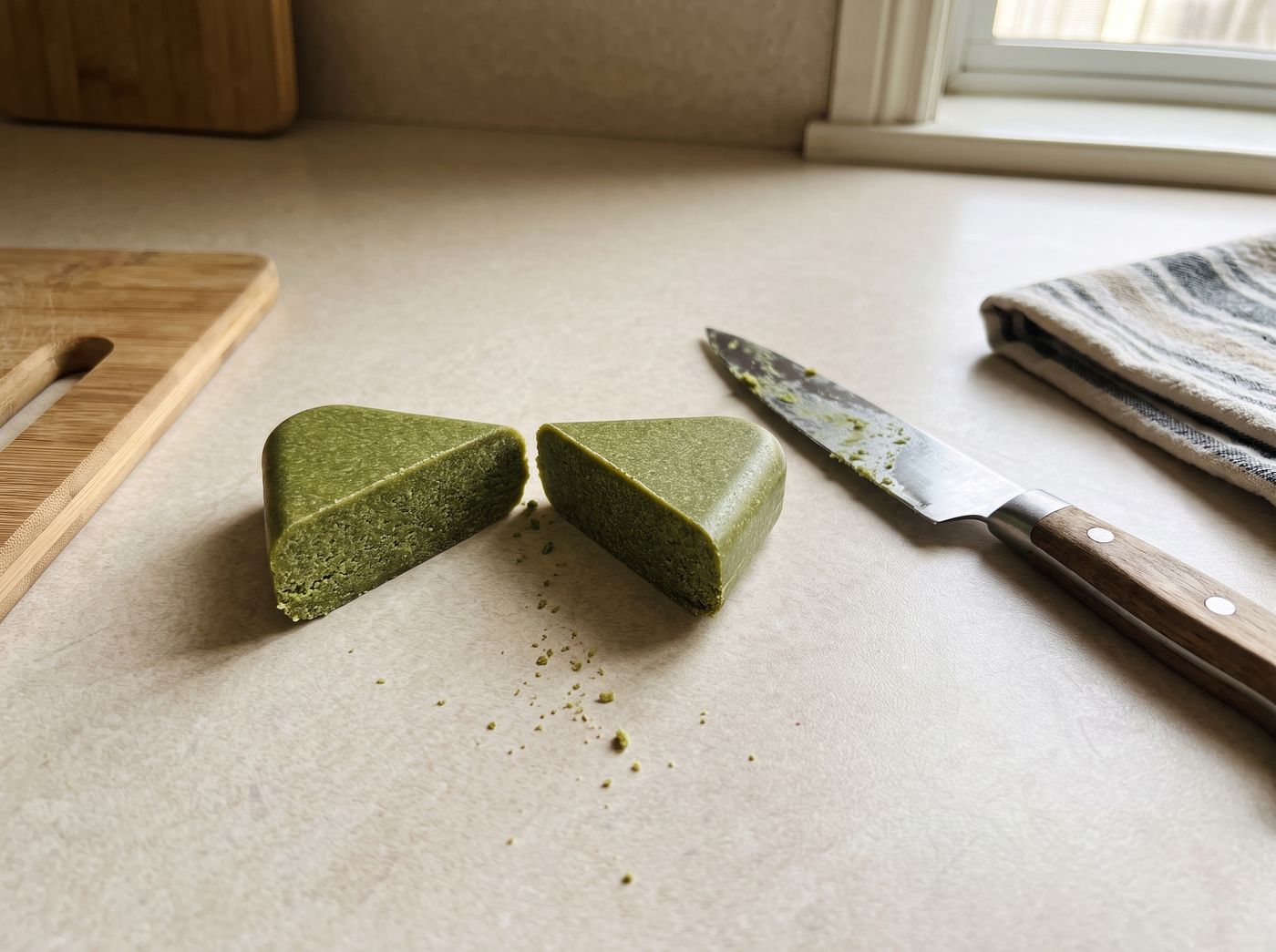
- No coating. Liquid shampoo is mostly water, which needs stabilizers, often including silicone. A solid bar isn't built on water, so there's no silicone weighing the roots down.
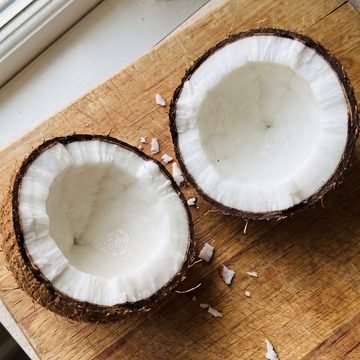
🥥 Coconut amino-acid cleanser
Lifts buildup, oil and dead skin without stripping the oils thin hair relies on.
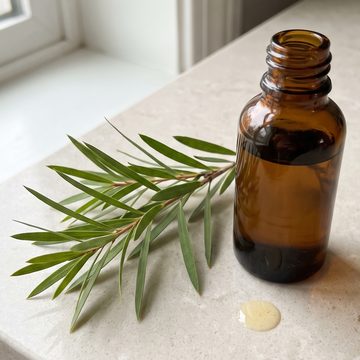
🌿 Tea tree oil
Helps lift buildup and leaves the scalp feeling fresh, without a harsh wash.
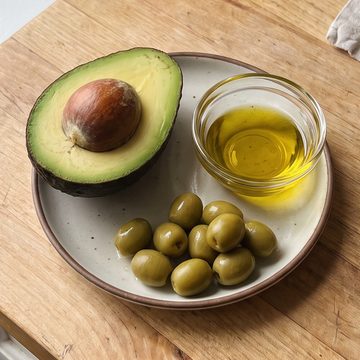
🫒 Olive oil, avocado butter and B5
Conditioning built into the bar, so there's nothing to fix afterward and no silicone.
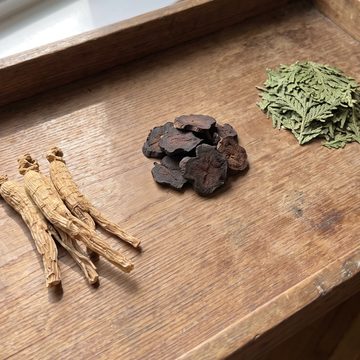
🌱 Ce Bai Ye, He Shou Wu and ginseng
Traditional Korean scalp botanicals, applied to a scalp that isn't coated.
It takes about two minutes in the shower. That matters, because a routine only helps if people keep using it.
🔬 The same strand, before and after a gentler wash

All 14 ingredients are printed on the packaging with their purpose, with nothing grouped under "fragrance" or "proprietary blend."
It's one of the few products I've found that is designed to avoid both stripping and coating.
⚖️ What This Bar Won't Do, and Why I Trust It More for That
- It won't regrow hair, and it doesn't claim to.
- It won't change your genetics or hormones.
- It isn't a treatment for any scalp condition. Broken or infected skin should be seen by a doctor.
- What it does: it cleans the scalp without stripping or coating the hair that remains, so less of it breaks.
I'm generally more comfortable recommending products that are clear about their limits. In this category, that's uncommon.
One Week Won't Impress You. Six Weeks Will.
Changes tend to be gradual. This is what patients typically report:
📅 Week 1: Wet hair slides under the fingers rather than squeaking, and it doesn't feel dry by the afternoon.
📅 Week 2: More hairs in the brush have a white bulb, and there are fewer short, broken pieces.
📅 Weeks 3–4: Roots stay fresher into the next day, and itching tends to settle.
📅 Week 6 onward: Hair sits up more instead of lying flat, and less conditioner is needed.
Not a promise. A sequence: stop the stripping first, then the breakage eases, then the hair stops lying flat.
Daniel returned for a follow-up after seven weeks. Before I asked how he was getting on, he took a hair from his brush, held it up to the window and showed me the end.
It had a bulb.
He didn't say much. He put the brush back in his bag.
About a month later, his wife asked what he was using, as her own hair had been getting drier over the past year. She has since started using it too.
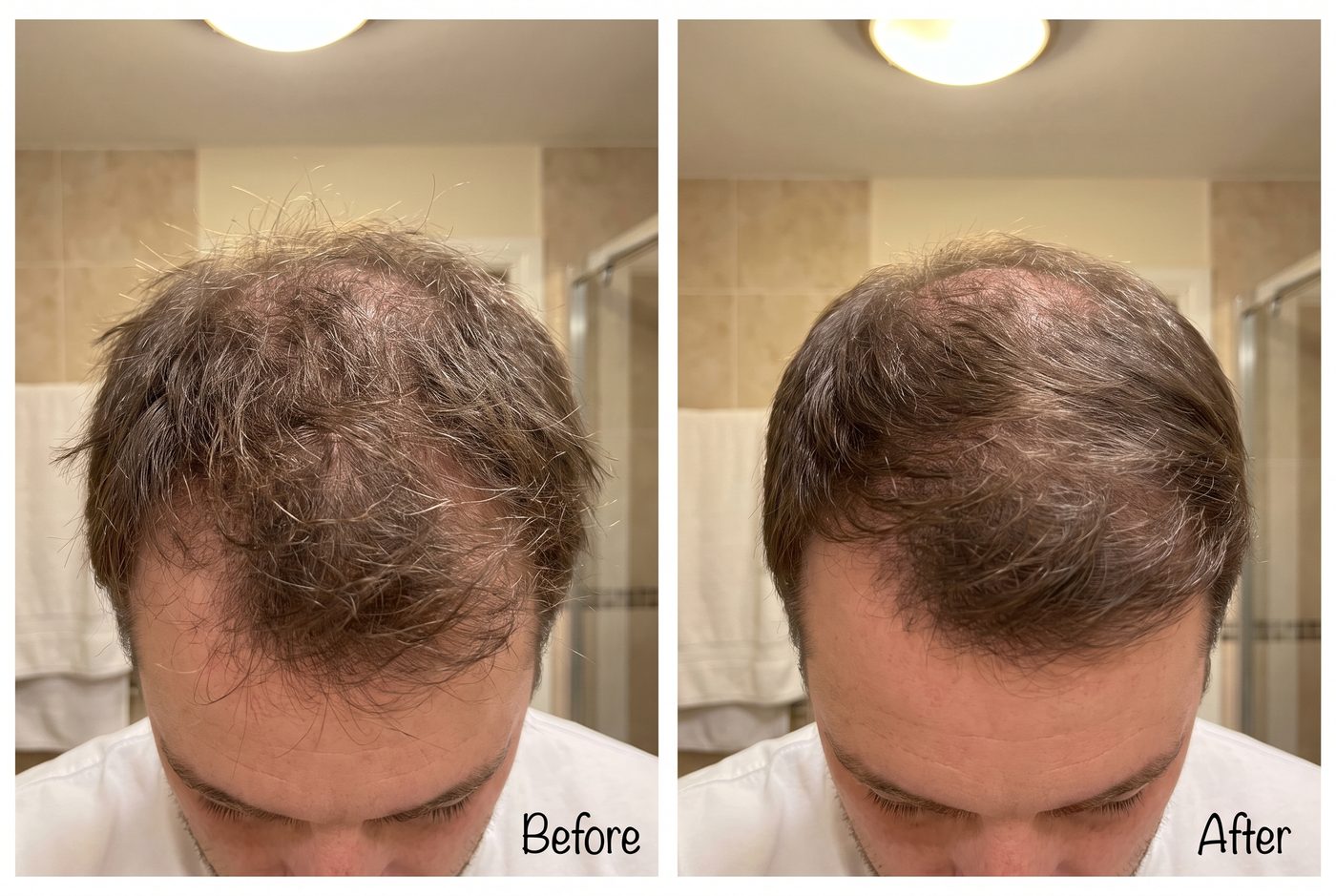
📸 Before and after
☝️ The 3-Second Test Most Shampoo Brands Hope You Never Try
- Run a fingernail firmly across your scalp near your part.
- Look under the nail.
- A gray, waxy residue is buildup: oil, dead skin and silicone left by previous products.
Unlike most claims in this category, it's something you can check for yourself.
Nothing Changes Until the Wash Does
Breakage is unlikely to improve while hair continues to be stripped at every wash.
Without a change, the pattern tends to continue: more products, more conditioner, a gradually more visible part, and growing reluctance to try anything new.
With a gentler wash, the cycle can stop. Hair no longer squeaks or snaps as easily, it sits up rather than lying flat, and there's less to worry about in the drain.
To summarize, a shampoo for thinning hair should:
- Clean without stripping
- Leave no silicone coating
- List every ingredient
- Avoid "detox" explanations
- Take about two minutes a day
That's the standard I use when recommending a shampoo, and this bar is the one I've found that meets it.
🎁 Where to Find It
UPDATE RECENTLY: The buy one, get one free offer is still available.
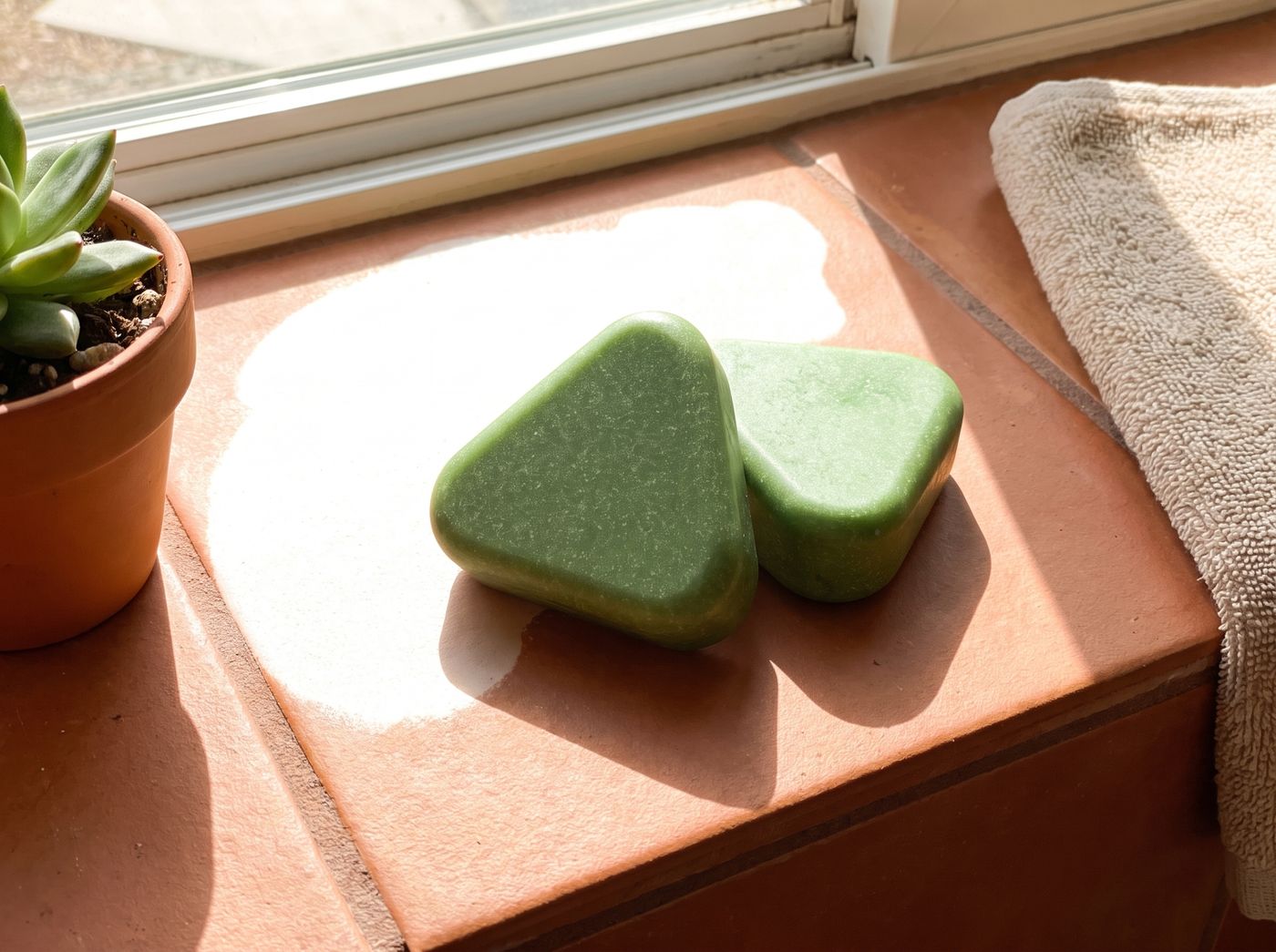
$39.90 $79.80
for two bars (buy one, get one free)
- 🧼 Each bar lasts 40 to 60 washes, roughly two months, so two bars last about four months
- 🚚 Free shipping, typically 5 to 10 days
- 🔓 No subscription
- 🛡️ 60-day money-back guarantee [confirm wording, e.g. "even if the bar has been used"]
📦 Here's Exactly What Happens When You Order
- Today: choose your bars and check out. A confirmation email arrives within minutes.
- Shipping: free, typically 5 to 10 days, with tracking.
- When it arrives: wet your hair, lather the bar into your roots for about two minutes, rinse. Keep using any treatment you're already on.
- Week 1 to 2: hair stops squeaking and feeling like straw.
- Week 6: hair sits up instead of lying flat.
- Day 60: not convinced? Email us for a refund. [confirm guarantee wording]
Been a strong advocate for this product ever since my hair looked the strongest it has ever been. Snag at this promotion while there is stock, I promise you it will be the best buy ever!Daniel Marley, verified buyer
Two Questions to Ask Yourself
Are you willing to change one thing about how you wash, if it targets something nothing else you've tried has touched?
Can you afford another six months of the hair you have left getting drier and flatter?
If the answer to both is yes, you know what to do.
P.S. Daniel spent $331 believing he was losing hair faster, when much of what he found was breakage. If that sounds familiar, check your own brush before buying anything. Look at the ends of five hairs. It will tell you more than a product label.
P.P.S. The fingernail test is also worth trying before choosing any shampoo, including this one. It takes a few seconds and doesn't depend on anyone's marketing.
Whatever you decide, I'm rooting for you.
— Eliza
Comments (214): "Did Anyone's Shedding Get Worse at First?"